Protecting a commercial property involves much more than locking the doors at the end of the day. Modern workplaces often contain valuable equipment, confidential information, restricted areas, and spaces that should only be accessible to specific employees. Visitors, contractors, vendors, and delivery personnel can add another layer of complexity. A single security measure may not provide enough control for all these situations.
Security access control systems can help businesses develop a layered approach in which different parts of a property receive protection according to their purpose and level of risk. Instead of treating every door and every user in the same way, organizations can create individual access rules that support both security and convenient movement.
Starting Protection At Main Entry Points
The first layer of access security typically begins at exterior entrances. Traditional keys provide basic protection, but they offer limited control once they are distributed. A lost key can create a security concern, while former employees may still possess copies unless locks are changed.
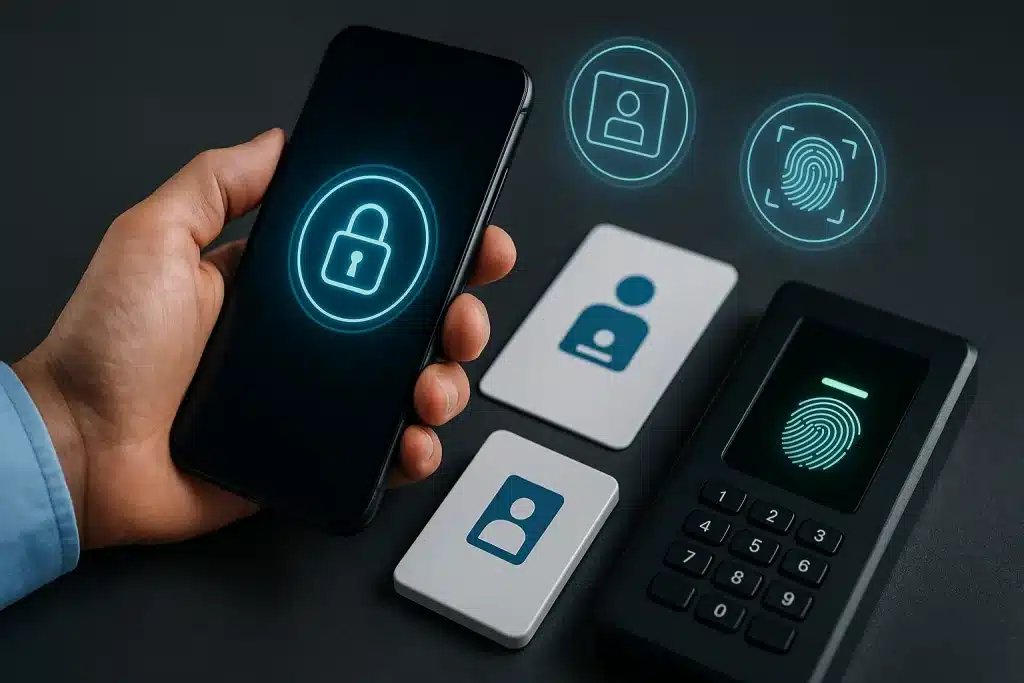
Electronic access credentials offer a more manageable alternative. Key cards, fobs, mobile credentials, PIN codes, and other technologies can allow authorized individuals to enter without relying entirely on physical keys.
Businesses can deactivate credentials when they are lost or when an employee leaves the organization. This provides administrators with greater control over who can enter the property while reducing some of the challenges associated with traditional key management.
Creating Different Levels Of Internal Access
Not every employee needs unrestricted access throughout a building. An office employee may need access to general work areas but not a server room, inventory area, records room, or executive office.
Modern security access control systems can support different permission levels based on job responsibilities. Access may be assigned according to an employee’s department, role, work schedule, or security clearance.
This creates another protective layer after someone has entered the building. If an unauthorized person reaches an internal area, additional controlled doors can prevent further movement into sensitive spaces. It also allows businesses to protect valuable assets without unnecessarily restricting ordinary workplace activity.
Adding Time-Based Access Rules
Authorization does not always need to remain active around the clock. A contractor who works during business hours may have no legitimate reason to enter a property late at night. Similarly, cleaning teams, temporary employees, and vendors may only require access during predetermined periods.
Time-based permissions allow organizations to determine both where and when a credential can be used. For example, an employee may be authorized to enter between specific working hours, while management personnel may receive broader access.
These rules add another layer of protection without requiring someone to manually lock and unlock individual areas throughout the day.
Improving Visitor And Contractor Management
Visitors create a different security challenge because they are not part of the regular workforce. Depending on the property, guests may include customers, interview candidates, maintenance technicians, delivery personnel, consultants, and contractors.
A layered security strategy should establish a clear process for handling these individuals. Visitors may be limited to reception areas, escorted through restricted sections, or provided temporary credentials for approved locations.
Temporary access can be particularly useful when contractors need to move between specific parts of a facility. Their permissions can be limited by location and duration rather than giving them unnecessary access to the entire building.
Maintaining Visibility Through Access Records
Physical barriers are only one part of security. Businesses also benefit from knowing when credentials are used and which areas are accessed.
Electronic systems can create records of authorized entry attempts and other access activity. These records may help security personnel investigate unusual events, review patterns, or determine when a particular credential was used.
Access records can also support internal accountability. If a restricted area contains sensitive documents, valuable inventory, or specialized equipment, having a record of access provides additional information when an issue needs to be reviewed.
Connecting Access Control With Other Security Measures
Access management becomes even more effective when it forms part of a broader security plan. Depending on the facility, businesses may combine controlled entry with surveillance cameras, alarms, intercoms, visitor management procedures, and security monitoring.
For example, a camera positioned near a controlled entrance can provide visual information alongside electronic access records. If suspicious activity occurs, security personnel can review both the credential activity and relevant footage.
The goal is not simply to add as many technologies as possible. Each security measure should perform a specific function while supporting the others.
Planning For Changing Security Requirements
Businesses rarely remain exactly the same. Teams expand, departments relocate, new facilities open, and security priorities change. A flexible access control strategy can make these transitions easier to manage.
Administrators can adjust permissions when employees change roles, add new controlled areas, and update access schedules as operational requirements evolve. This flexibility can be especially helpful for expanding businesses and establishments with constantly shifting staff.
Building Security In Layers
Effective property protection depends on creating multiple barriers rather than relying on one point of defense. Exterior entry control can protect the building perimeter, internal permissions can secure sensitive spaces, time restrictions can limit unnecessary access, and activity records can improve visibility.
By combining these elements with appropriate security procedures and complementary technologies, businesses can create a more structured approach to protecting employees, information, equipment, and property. Security access control systems provide the flexibility needed to build these layers while allowing authorized people to move through a facility efficiently.